How to Remove an Ice Dam
cold-climate homes in the United States and Canada; call a licensed trade where the steps say so · Last checked · Suggest an edit
https://instructions.wiki/winter/remove-an-ice-dam
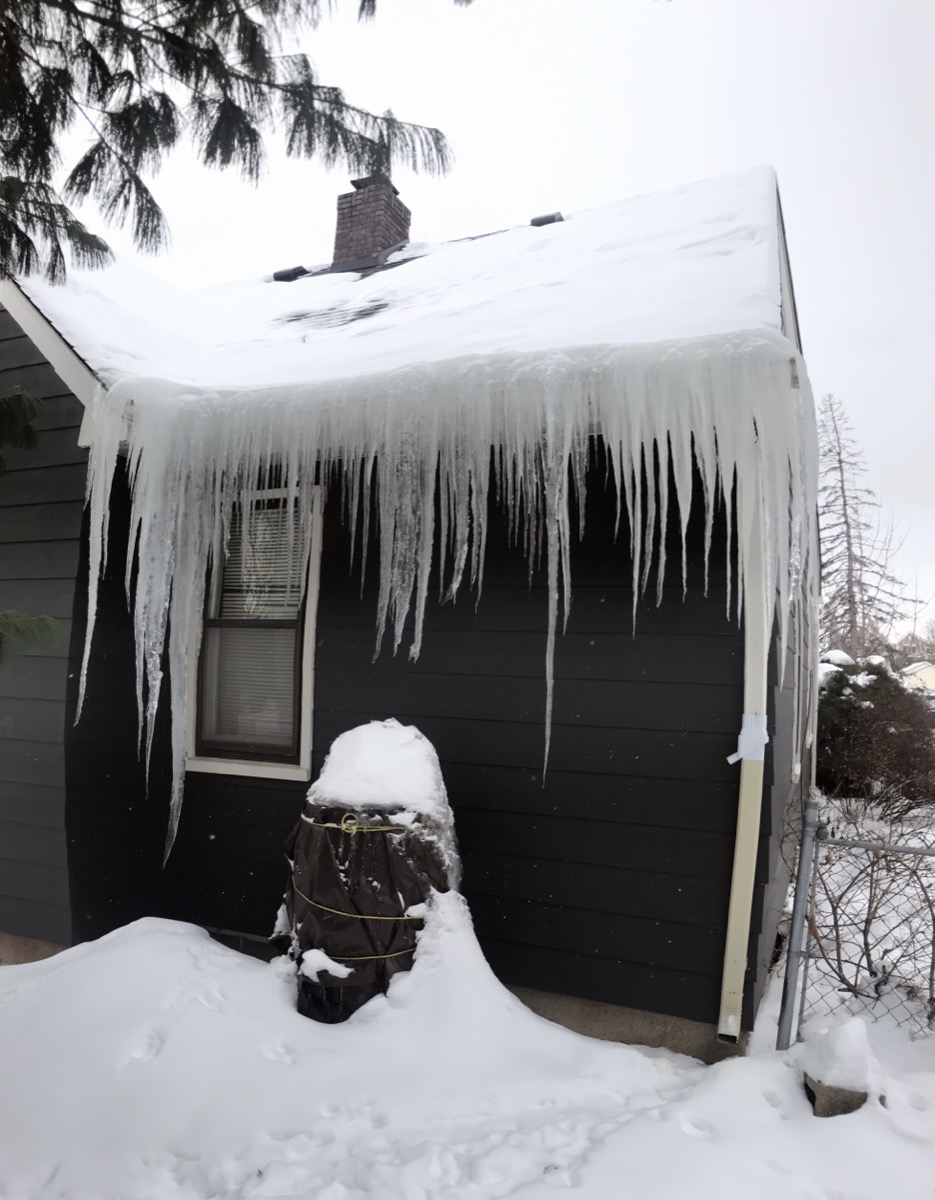
The first sign is almost never an icicle. It is a brown ring spreading on a ceiling near an outside wall, because meltwater is trapped behind a ridge of ice at the eave and is backing up under the shingles. Knocking the icicles down does nothing about the water already coming in.
Contain the water inside
Put a bucket under the drip and move anything below it. If the ceiling is bulging or sagging, that pocket is holding pounds of water and may let go all at once. Poke a small hole at the lowest point of the bulge with a screwdriver and let it drain into the bucket in a controlled way.
Pull the snow off the roof from the ground
Snow on the roof is the fuel for the dam, so removing it slows the leak within hours. Use a telescoping roof rake from the ground, standing to the side of where the snow will fall. Look up and locate the overhead service drop and any power lines before extending the pole, and keep a metal rake well away from them. Clearing the first few feet up from the eave is what matters.
Melt a drain channel through the dam
Fill a nylon stocking or a fabric tube with calcium chloride ice melt, tie it off, and lay it across the dam so it runs straight up the slope, not along the eave. Within a day it melts a vertical channel that lets the trapped water drain off the roof. Place it from a ladder only on bare ground with solid footing, or push it into place from below with the roof rake.
Keep rock salt and tools off the roof
Rock salt, which is sodium chloride, corrodes flashing, gutters, and fasteners, and it kills the plantings the runoff lands on. Never chip, hammer, axe, or pick at the ice: it tears shingles apart, and it is done standing somewhere no one should be. Never use an open flame or a torch. Do not climb onto a snowy or icy roof, and do not stand on a ladder set in ice.
Hire a contractor with a steam rig
Low pressure steam is the only method that takes a dam off without damaging the roof, and a crew can clear one in a few hours. Pressure washing and boiling water both strip granules and drive water under the shingles, so neither is a substitute.
After the leak stops. Have the attic checked for wet insulation, which stays compressed and useless once it soaks.
If it comes back every year. The cause is heat escaping into the attic, not the gutters. See how to prevent ice dams.