How to Test Carbon Monoxide Alarms
cold-climate homes in the United States and Canada; call a licensed trade where the steps say so · Last checked · Suggest an edit
https://instructions.wiki/winter/test-carbon-monoxide-alarms
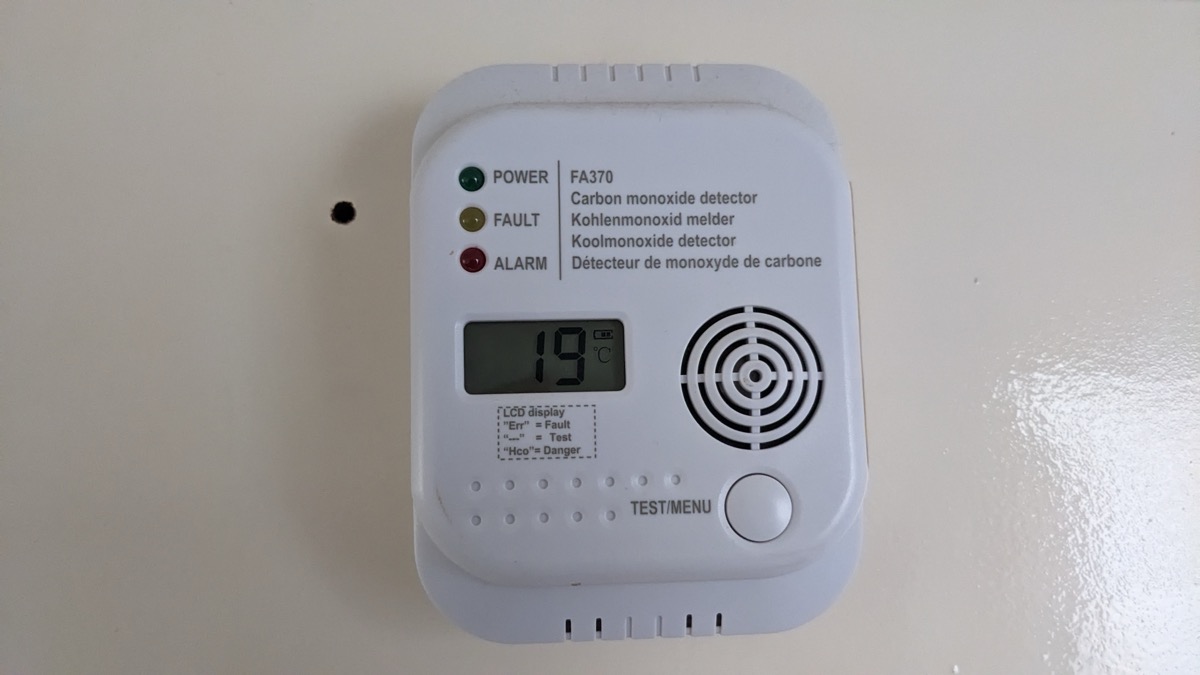
The alarm chirped at 3 a.m., a fresh battery went in, and it seems fine now. The test button is reassuring in a way it does not deserve. It verifies the horn, the battery, and the electronics; it does not test the carbon monoxide sensor at all. That sensor wears out on a fixed schedule whether or not the button keeps working.
Press and hold the test button until it sounds
Hold the button down until the alarm sounds its full pattern, usually four loud beeps, then release. Stand back and cover the ears of anyone nearby. Silence, a weak tone, or a delay of more than a few seconds means the unit comes down and gets replaced. Do this on every alarm in the house once a month.
Read the manufacture date on the back
Take the alarm off its bracket and look for a date printed or stamped on the back or side. Sensors are certified for a set life, typically 5 to 10 years from that manufacture date, not from the day it was installed. Past that date the whole unit gets replaced, because the sensor is not a serviceable part.
Replace the battery yearly and learn the chirps
Put in a fresh battery once a year, or immediately when the unit starts chirping. A single chirp every 30 to 60 seconds is almost always a low battery. An end of life chirp sounds on a different pattern and does not stop when a new battery goes in, which means the alarm has expired.
Place alarms on every level and outside sleeping areas
Mount one on every level of the home including the basement, and one outside each separate sleeping area, following the manufacturer's mounting instructions. Keep them more than 15 feet from furnaces, water heaters, and other fuel-burning appliances, and out of bathrooms and directly above stoves, where humidity and cooking fumes cause nuisance alarms.
Get everyone outside when it sounds for real
A sounding alarm that is not a test means leave immediately. Move everyone, including pets, outside into fresh air, then call 911 from outside. Do not open windows first, do not go looking for the source, and do not go back in until the fire department says the house is clear.
Combination alarms count for both. A unit listed for both smoke and carbon monoxide satisfies both requirements at that location, but it has two separate sensors and two separate expiration behaviors, so check the date the same way.
Hardwired units still need testing. A plug-in or hardwired alarm has a backup battery that ages out and a sensor that expires on the same schedule as a battery-only model.