How to Stop Frost from Forming in the Attic
cold-climate homes in the United States and Canada; call a licensed trade where the steps say so · Last checked · Suggest an edit
https://instructions.wiki/winter/stop-frost-from-forming-in-the-attic
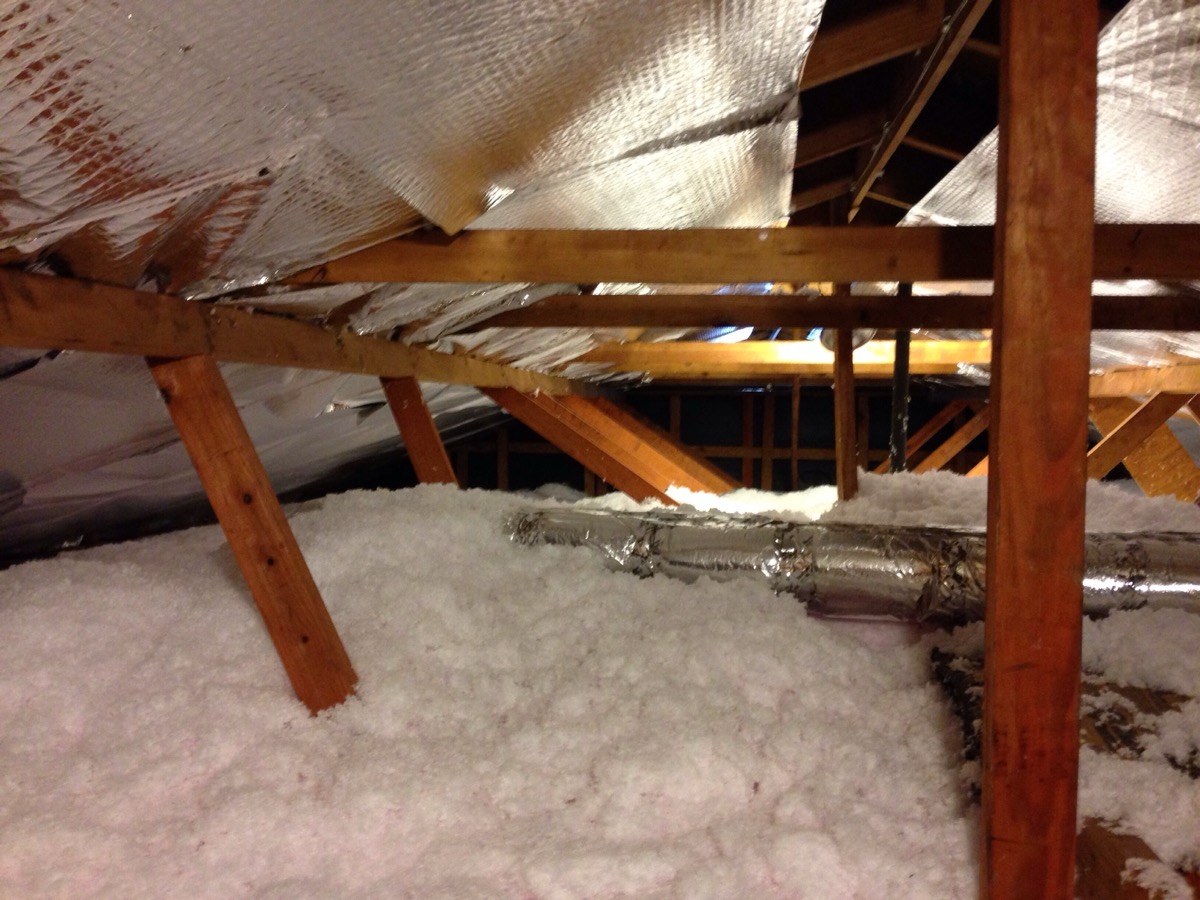
There is white frost coating the underside of the roof sheathing, or a ceiling stain appeared during the February thaw and looks exactly like a roof leak. It almost never is one. Warm indoor air carrying household moisture is leaking up into a freezing attic, condensing on the cold sheathing, and freezing there until a warm day melts it onto the insulation below.
Seal the air leaks from the house into the attic
This is the fix that actually matters, and it comes first. Find every opening between conditioned space and the attic: the attic hatch or pull-down stair, recessed light housings, bath and kitchen fan housings, plumbing vent stacks, chimney chases, wiring penetrations, and the top plates of interior walls. Seal them with caulk, foam, or rigid material rated for the location, using fire-rated materials at flues and around chimneys.
Confirm every fan and the dryer vent ends outdoors
Follow each bath fan duct, the range hood duct, and the dryer duct to where it terminates. Every one of them must exit through the roof or a wall cap to open air. A duct dumping into the attic, or one aimed at a soffit where the air gets pulled straight back in through the vents, is a common mistake and a very wet one.
Cut the humidity at its source
Run bath fans during a shower and for 20 minutes after. Cover an open sump pit with a sealed lid. Watch a whole house humidifier closely, because a setting that is comfortable in November puts far too much moisture in the air during deep cold and is a frequent cause of attic frost on its own.
Open up the soffit and ridge ventilation
A cold attic needs air moving through it. Check from inside that insulation has not been pushed over the soffit vents at the eaves, and install baffles to hold a clear channel from each soffit vent up to the ridge or roof vents. Clear the exterior vent screens of paint, dust, and nests.
Leave the frost alone and check what it soaked
Do not climb up and scrape or heat the frost. Let it melt on its own and fix the cause instead, since the same frost returns within a week otherwise. Once it has dried, inspect the insulation underneath. Batts that were repeatedly soaked lose most of their value and any that stayed damp against wood needs to come out.
Add insulation only after air sealing. Insulation slows heat, but it does not stop the moving air that carries the moisture, so adding depth first buries the leaks and makes them harder to find.
When the stain keeps returning. Persistent frost after sealing and venting usually points to a ducted appliance still discharging into the attic or a bypass hidden behind a knee wall.
Photo: Jason Dale, CC BY-SA 3.0.