How to Keep a Sump Pump from Freezing
cold-climate homes in the United States and Canada; call a licensed trade where the steps say so · Last checked · Suggest an edit
https://instructions.wiki/winter/keep-a-sump-pump-from-freezing
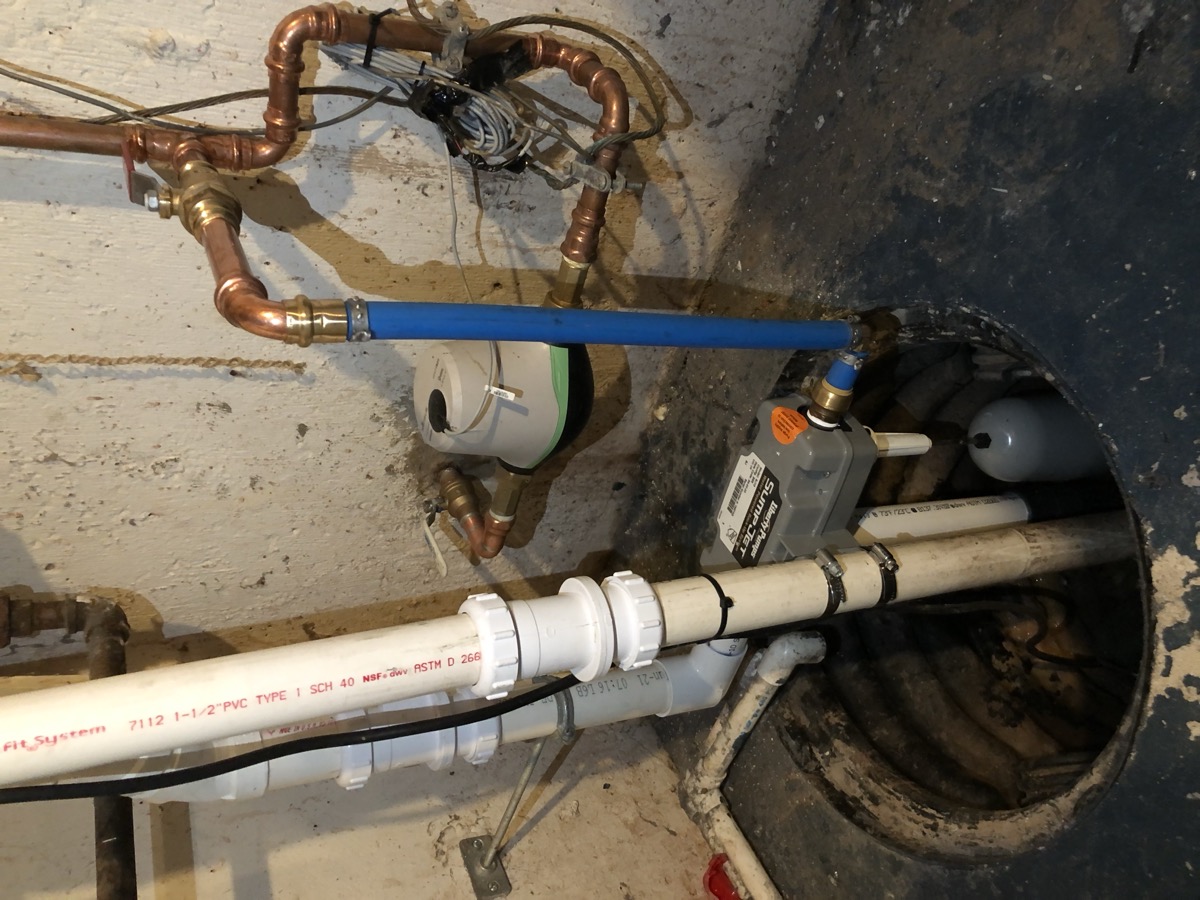
The pump in the basement hums, or cycles over and over, and the pit is filling anyway. The pump itself is sitting in heated space and is almost never the part that froze. The discharge line outdoors is, and a pump pushing against a plug of ice keeps running until the motor burns out or the pit overflows across the floor.
Clear the discharge outlet of snow and ice
Walk out to where the pipe ends and clear snow, leaves, and ice away from the opening and for a foot or two around it. A drift banked against the outlet, or an ice collar formed from an earlier discharge, is enough to block the line. Check it after every snowfall and after any freeze that follows a thaw.
Slope the line so it drains completely
Any low spot or sag holds water between cycles, and that water freezes first. The outdoor run should fall continuously away from the house so the pipe empties itself after each cycle. Support long runs so they cannot sag over the winter, and remove any dip where the pipe crosses a step or a root.
Use a wider pipe outdoors and keep the run short
Step the outdoor section up to a larger diameter than the indoor discharge. A wider pipe takes far longer to ice shut, and the extra opening gives water a path even when the walls start to glaze. Keep the outdoor run as short as the grade allows, since every extra foot is more exposed pipe.
Add a freeze relief fitting near the foundation
A freeze relief fitting, sometimes sold as a discharge adapter or an ice guard, installs in the line just outside the foundation and opens if the pipe downstream blocks. Water then dumps at the fitting rather than backing up into the pump. It is the single part that keeps a frozen line from becoming a burned out motor.
Discharge well away from the foundation
Water released next to the wall soaks straight back down to the footing drain and returns to the pit, which means the pump runs again in the cold and ices the line further. Carry the discharge at least 10 feet out and downhill of the foundation, onto ground that slopes away.
Test the pump with a bucket of water
Pour a five gallon bucket of water slowly into the pit. The float should lift, the pump should start, water should leave the outdoor pipe, and the pump should shut off on its own. Do this before the first hard freeze and again midwinter. Unplug the pump before reaching into the pit, and if the floor around it is wet, cut power to that circuit at the breaker first.
When to call a licensed trade. A pump that hums without moving water, trips its breaker, or runs continuously after the line is clear needs a plumber or an electrician.
Photo: Famartin, CC BY-SA 4.0.