How to Keep a House Warm in a Winter Power Outage
cold-climate homes in the United States and Canada; call a licensed trade where the steps say so · Last checked · Suggest an edit
https://instructions.wiki/winter/keep-a-house-warm-during-a-winter-power-outage
The furnace is silent, the house is already a few degrees down, and the forecast says the line crews will not be out until tomorrow. Trying to keep the whole house livable is the mistake. A house sheds heat through its exterior walls, so the job is to shrink the space being heated down to one room and defend the plumbing everywhere else.
Pick one room and close off the rest
Choose a small room with as few exterior walls as possible, ideally on the south side and away from the ground floor's cold entry doors. Move everyone into it and shut every door between that room and the rest of the house. A bathroom or a small bedroom holds body heat far better than an open living area.
Trap heat at the windows and doors
Hang blankets or quilts over the windows and across the doorway of the chosen room. Open south facing curtains while the sun is on them, then close everything at dusk. Lay rolled towels or a draft snake along the base of exterior doors and at the bottom of the room's own door.
Dress in layers and sleep warm
Layers of wool or synthetic trap more air than one heavy coat, and a hat matters more than most people expect. Use sleeping bags rather than a single blanket. Pitching a camping tent on the bed or floor works remarkably well, since the small volume fills with body heat in minutes. Eat and drink warm things through the day.
Heat only with something vented
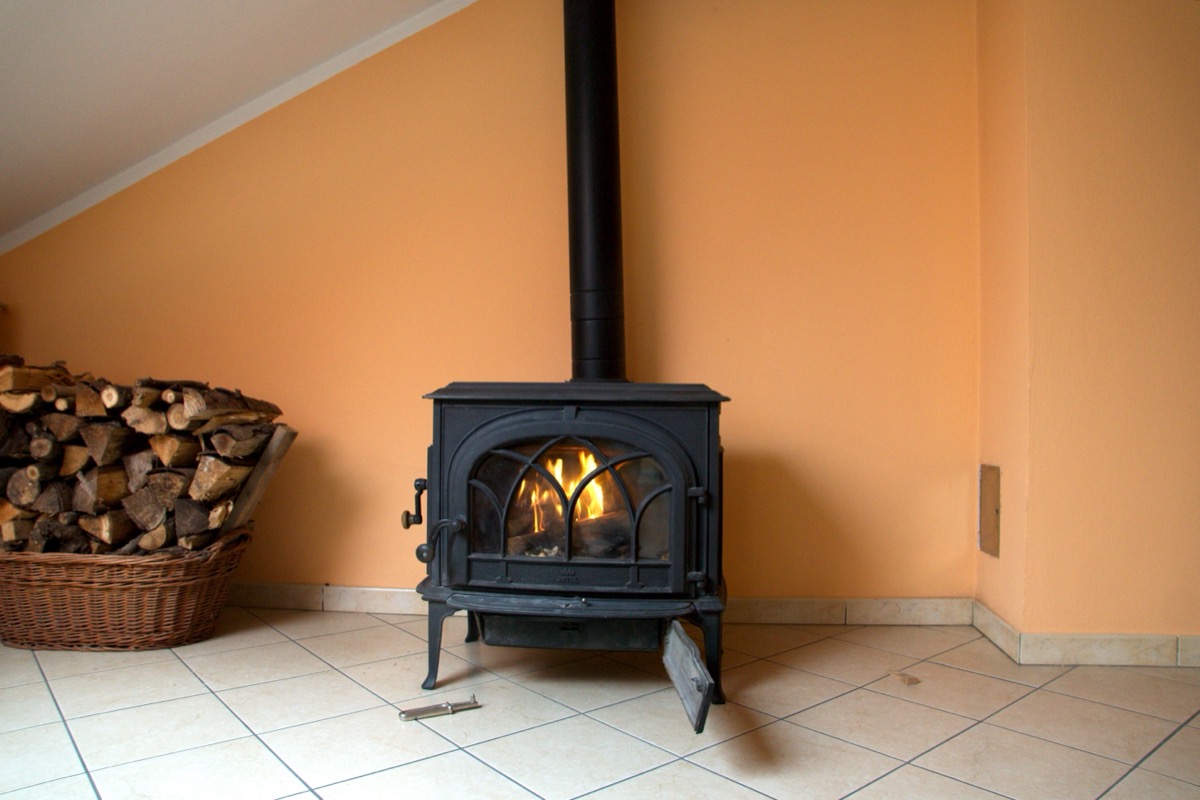
Never heat a house with a gas oven, a charcoal grill, a camp stove, or any unvented fuel-burning heater indoors. All of them produce carbon monoxide with no warning. A wood stove or a fireplace in good repair with the damper open is fine. If a CO alarm sounds, get everyone outside into fresh air and call 911 from outside.
Protect the plumbing at the same time
If the house will drop near freezing, open a pencil-thin trickle at the faucets farthest from the meter, open the cabinet doors under sinks on outside walls, and confirm the main shutoff turns in case a line splits. Knowing where that valve is matters more than anything else, so read how to shut off the water to a burst pipe before it is needed.
Keep the food cold and the phones charged
Leave the refrigerator and freezer doors shut. A full freezer holds safe temperatures for roughly 48 hours and a half-full one for about 24. Charge phones and power banks before the storm arrives, and run a car only outdoors to charge from it.
When to leave instead. If indoor temperatures keep falling and there is no safe heat source, go to a warming center or stay with someone who has power.